A Short, Salty History of Surfing on Folly Beach
A Short, Salty History of Surfing on Folly Beach
If you’ve ever watched a glassy Folly sunrise peel down the sandbars, you know why this barrier-island sandspit turned into South Carolina’s most storied surf town. Folly’s surfing story is part family business, part DIY grit, and part hurricane-shaped geography—all wrapped in a community that still waxes boards on porches, swaps tide notes in line at Lost Dog, and measures time by the tide chart.
How surfing landed on Folly
Modern surfing on Folly took off in the mid-1960s, when a small, dusty room on the side of the old bowling alley became the first serious hub for local wave riders. Dennis McKevlin and his son Ted opened McKevlin’s Surf Shop in 1965, cutting blocks of wax from supermarket paraffin and selling big single-fin logs to a handful of pioneering groms. Within a few years the shop moved to Center Street, and by 1980 it settled into the long wooden building that’s still home base today. That continuity—nearly six decades—helped knit surfing into Folly’s everyday life. (MCKEVLIN’S SURF SHOP)
Those early years weren’t just retail; they were culture-building. According to the Folly Beach Historical Society, surfers formed the island’s first club in 1965 (the West Coast East Surf Club) and ran the first contest in 1966, establishing a tradition of beach-day heats, hand-painted trophies, and bragging rights that continues in various forms under ESA today. (Folly Beach Historical Society)
Folly’s surf geography: the pier, the Washout, and in-between
Folly’s waves are shaped by shifting sandbars, longshore currents, and human structures. The Folly Beach Pier—rebuilt recently, still the island’s big landmark—focuses swell and wind in ways that can create wedgy peaks on the right tide. On good days you’ll see longboard trim lines shooting from the outside sandbar into a playful inside bowl; on punchier swells, shortboards throw quick turns between the pilings. (Always follow any posted rules and give anglers and swimmers space.)
Slide east and you reach the Washout, the most famous stretch of Folly. The name isn’t marketing; Hurricane Hugo in 1989 literally “washed out” the oceanfront road and houses here, opening more exposure to wind and waves and leaving a stretch of beachbreak that’s become a Lowcountry proving ground. When north or northeast winds scour the sand into defined bars, you can get crisp, lined-up surf that feels more Outer Banks than Lowcountry. (South Carolina Picture Project)
Between the pier and the Washout are the everyday workhorse banks—Fourth East through Thirteenth East, then up toward the lighthouse spit. On most average days, that’s where Folly’s bread-and-butter surfing happens: waist-to-chest peaks that reward clean footwork on a log or a quick redirect on a fish.
Longboards, shortboards, and the Folly “quiver truth”
Because Folly sees a lot of small-to-moderate surf with sandbars that change week to week, local surfers tend to be pragmatic about board choice. Logs rule in summer—9′ plus boards with soft rails for trimming and noseriding across slow sections. When tropical or strong frontal swells show up, you’ll see step-ups, everyday shortboards, and fishy shapes come out of the racks. The real Folly quiver truth: have a log for 1–3′, a lively groveler/fish for 2–4′, and a reliable shortboard or step-up for 4–6’+ days at the Washout or on a focused pier bar. (Ask three locals and you’ll get five opinions, but this is a solid starting point.)
Shops that shaped (and still shape) the scene
McKevlin’s Surf Shop is the island’s elder statesman—founded in 1965 and still run by the McKevlin family. Beyond selling boards and wetsuits, they’ve functioned as a clubhouse and memory bank for generations of surfers. Their own history notes that Ted McKevlin—one of Folly’s pioneer surfers—fronted the early shop, and the brand’s presence has anchored Center Street’s surf identity ever since. (MCKEVLIN’S SURF SHOP)
Ocean Surf Shop sits just down Center Street and doubles as a daily conditions hub with a live cam, phone surf report, and a deep rack of boards from long to short. It’s a “stop-in for wax, stay to talk sandbars” kind of spot, with posted hours, a dedicated report line, and those essential bits of practical info you need before you paddle out. (oceansurfshop.com)
Sea Monkeys Surf & Skate brings the quirky, creative energy Folly’s known for—part board shop, part hang, and all island vibe. Located at 83 Center Street, they carry longboards, shortboards, skate decks, and apparel; the personality is half the fun and the board wall is legit. (Yes, they joke about being “Folly’s 3rd best surf shop.” It’s very on-brand.) (Sea Monkeys Surf & Skate)
The Surf Museum at the library: our living memory
If you love lore, go straight to the source: the Folly Beach History Museum inside the Community Center/Library at 55 Center Street. Its inaugural exhibit, “Surfing on the Edge,” showcases photos, artifacts, and interviews that document the island’s surf culture—from the bowling-alley shop days to contest posters and classic boards. Hours change seasonally (and often pop-up), so check the museum’s posts before you roll over. It’s a short walk from the pier and a perfect flat-day stop.
Contests and the ESA backbone
Organized amateur surfing on Folly flows through the Southern South Carolina district of the Eastern Surfing Association (ESA). The district runs regular events—often at the Washout, sometimes at the pier—feeding into larger regional championships each spring. It’s where local groms learn jersey craft, where longboard divisions still celebrate classical style, and where you’ll spot that next generation who somehow always knows which bar is best at low tide. Registration and schedules live on the district’s pages and contest platforms. (Eastern Surfing Association)
Lessons: how to get started (or get better)
Folly’s teaching scene is active and approachable. A good lesson program will match board size to your height/weight, pick the right sandbar for wind and tide, and teach ocean awareness as much as pop-ups. You can book directly with island operators and shops:
- Ocean Surf Shop: Start with their surf report and in-shop guidance; they partner in the local ecosystem and can steer you to the right board and coach for the day’s conditions. Call the shop or check their site for details. (oceansurfshop.com)
- Independent schools like Isla Surf School, Shaka Surf and Folly Beach Surf Lessons run daily sessions in season. Check availability, read recent reviews, and book a time near mid-tide on a gentle forecast for the most forgiving waves. (Isla Surf School)
Pro tip: ask for a soft-top in the 8’–9′ range for your first lesson, schedule around knee-to-waist high surf, and wear a rash guard. You’ll progress faster and have more fun.
Hurricane swells: beauty, risk, and respect
From late August into October, tropical systems can send long-period energy bending into Folly’s sandbars. Those days are intoxicating—line after line rifling through the Washout, rips running hard along the bar, and a buzz on Center Street you can feel in your ribs. But storms are unpredictable. Tracks wobble, periods spike, winds swing. Local officials may restrict ocean access during active warnings, and conditions can go from “dreamy” to “don’t paddle out” in an hour. The bottom line: watch official forecasts, respect closures, and surf within your limits. There will always be another swell. (New York Post)
Etiquette and everyday rhythm
Folly works because people share it. A few reminders that keep the lineup friendly:
- Know the right-of-way: the surfer deepest (closest to the peak) has priority.
- Don’t paddle out through the impact zone if someone’s riding toward you; use a channel.
- Give anglers space near the pier and obey any posted rules.
- Smile. You’re surfing at Folly.
Where the culture lives now
Pop into McKevlin’s and you’ll feel the weight of history in old photos and hand-lettered signs. Walk to Ocean and you’ll get real-time sandbar talk and a cam to back it up. Drop by Sea Monkeys and you’ll get the Folly wink—colorful tees, a longboard you didn’t know you needed, maybe a skate deck for no-surf days. Wrap it by wandering the Surf Museum at the library, where the stories of Ted McKevlin, the 1966 contest, and the post-Hugo Washout all braid into one thing: a small island that learned to dance with the Atlantic. (Folly Beach Historical Society)
Quick guide (bookmark this)
- Best beginner windows: small summer mornings or mellow winter days with light winds and a mid-tide push.
- Boards: log for tiny; fish/groveler for average; step-up when the tropics light up.
- Where to ask: McKevlin’s (since ’65), Ocean (daily cam/report), Sea Monkeys (boards & skate), museum for history. (MCKEVLIN’S SURF SHOP)
- Contests: ESA Southern SC; mostly at the Washout, sometimes at the pier. (Eastern Surfing Association)
- Lessons: book with local schools; call or stop by shops for gear and referrals. (Isla Surf School)
Folly’s surf isn’t just waves; it’s people, places, and a timeline that keeps rolling with the tide. Whether you’re pushing a 9’ log into your first green face by the pier or chasing a hurricane wedge at the Washout, you’re part of a story that started in a 9-by-30-foot storage room—and somehow, beautifully, never stopped growing. (MCKEVLIN’S SURF SHOP)
PS. If you ever want to find the Flipper Finders Staff when not running tours, look no further than your closest surf break. We love to surf!
PPS: If you want to find the Flipper Finders Staff in the off season. Dec – Feb, then check Central America, Indonesia or some exotic warm water wave.
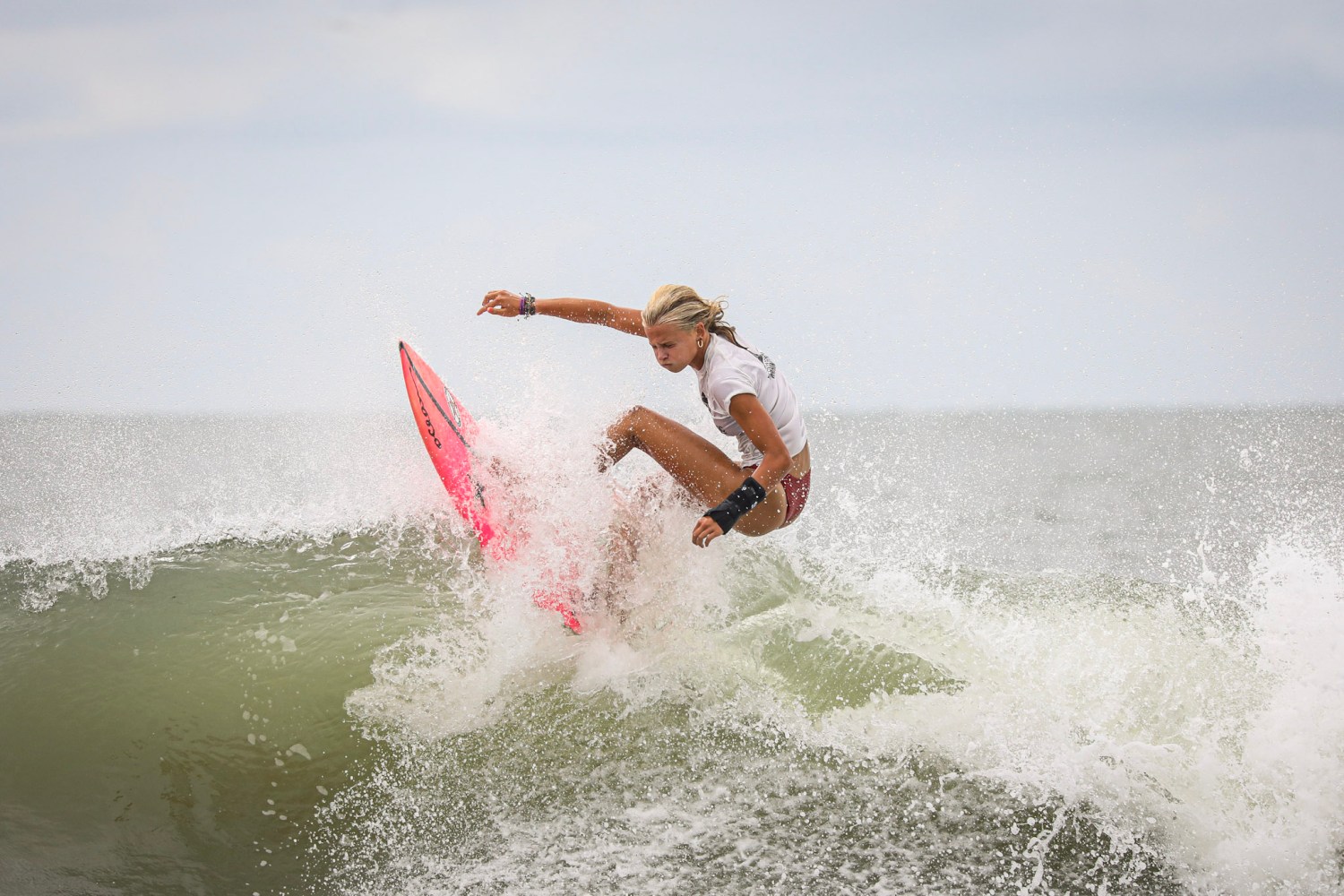
Local Surf Hero Georgia Brown