
Strand Feeding Season in Folly Beach — When and Where to See It (Fall Guide)
What Is Strand Feeding, Exactly?
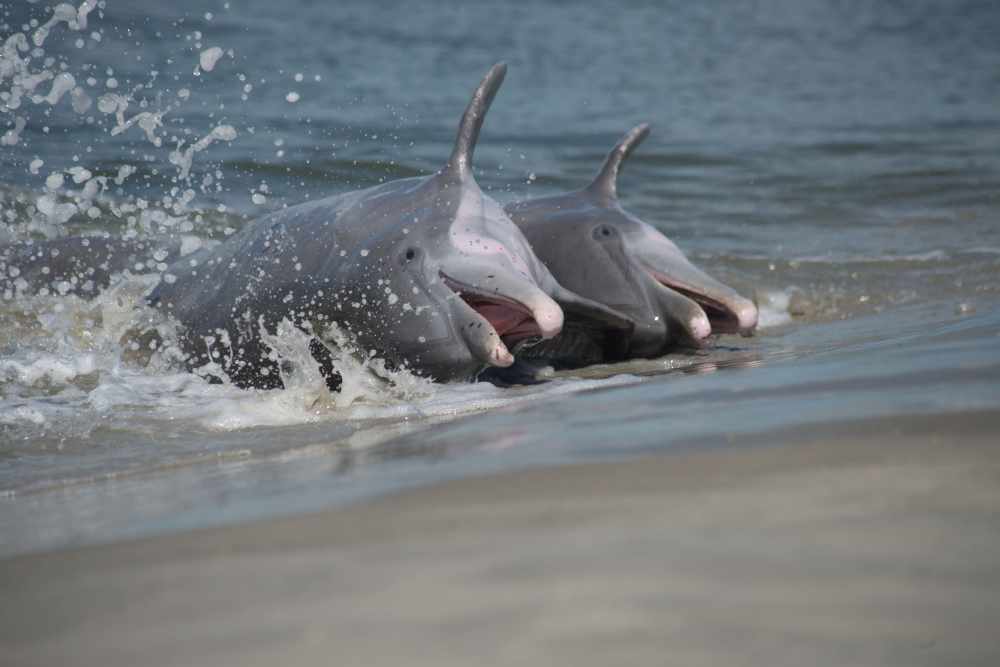
If you’ve spent any time on the water around Folly Beach, you may have heard whispers about “strand feeding” — and if you haven’t seen it yet, it’s worth planning your next boat tour around. Strand feeding is a cooperative hunting technique used almost exclusively by resident bottlenose dolphins in the tidal creeks and marshes of the South Carolina Lowcountry. A small pod, usually somewhere between two and four dolphins, work together to herd a school of mullet toward a sloping mud bank. Once the fish are tightly packed, the dolphins accelerate in unison, creating a wave that pushes the fish right up onto the exposed shoreline. Then comes the wild part: the dolphins launch their own bodies out of the water and onto the mud, snap up a mouthful of fish, and slide back into the creek before the tide can strand them for good.
It’s one of the most dramatic animal behaviors you can witness from a boat, and it’s also one of the rarest. Strand feeding is a learned skill passed down from mother to calf, not something every dolphin knows how to do, and it only happens in a handful of places on the planet. The marshes behind Folly Beach and Morris Island happen to be one of them.
Why Late Summer & Early Fall Prime Strand Feeding Season
While Folly Beach dolphins can technically strand feed at any time of year, sightings climb noticeably from late summer into fall. As mullet migrate out of the upper creeks and rivers toward the ocean to spawn, the local dolphin population has a much bigger, denser buffet to work with, and that means more feeding activity for visitors to catch. Resident dolphins are also bulking up ahead of winter, so they have extra motivation to hunt efficiently. That combination of a heavy mullet run and cooling water temperatures is exactly why late July, August & September, are considered the sweet spot for strand feeding sightings in the Charleston area.
Best Time of Day (and Tide) to See It
Tide matters more than the clock when it comes to strand feeding. Dolphins tend to strand feed on a rising or falling tide, when water levels are low enough to trap fish against the mud but still high enough for the dolphins to slide safely back in. Many local guides watch for the window roughly one to two hours on either side of low tide, since that’s when fish have the least room to escape. .
Our Folly Beach Dolphin Boat Tour times departures around these tidal windows whenever possible, and our captains are constantly reading the water for signs of feeding activity before deciding where to point the boat next.
Where to Look Near Folly Beach and Morris Island
Strand feeding happens along sloping, exposed pluff mud banks and gently sloped sandy beaches which is why the creeks behind Folly Beach and around Morris Island are such reliable territory. These tidal creeks give dolphins the shallow, muddy shoreline they need to execute the maneuver safely, and they’re calm enough that a slow-moving pontoon or center console can hang back and watch without disturbing the pod.
If you’re hoping to combine a shot at strand feeding with a slower-paced, nature-focused outing, our Shelling & Nature Tour to Morris Island winds through some of the same creek systems where the behavior is most commonly reported. For something more intimate, our Small Private Boat Tours let your captain fully customize the route based on where the dolphins are actively feeding that day.
How to Watch Responsibly
Strand feeding is a delicate, learned behavior, and it’s protected under federal law. Approaching, feeding, or attempting to touch dolphins engaged in this activity is illegal and can disrupt a behavior that took years for that dolphin to learn. The good news is you don’t need to get close to enjoy the show. Every Flipper Finders captain is trained to hold a respectful distance, cut the engine when dolphins are actively feeding nearby, and let the moment unfold naturally. That patience is exactly why our guests tend to walk away with the best stories (and the best photos).
Your Best Shot at Strand Feeding
Late Summer & Early Fall is our favorite time on the water, and strand feeding sightings are a big reason why. Whether you book our flagship Dolphin Boat Tour or a golden-hour Sunset Dolphin Boat Cruise, our captains will put you in the right creeks at the right tide to give you the best possible shot at witnessing this rare behavior firsthand. Have questions about timing your visit? Check our FAQ page or reach out to our team and we’ll help you plan the best fall tour for your trip.